 Image 1 of 3
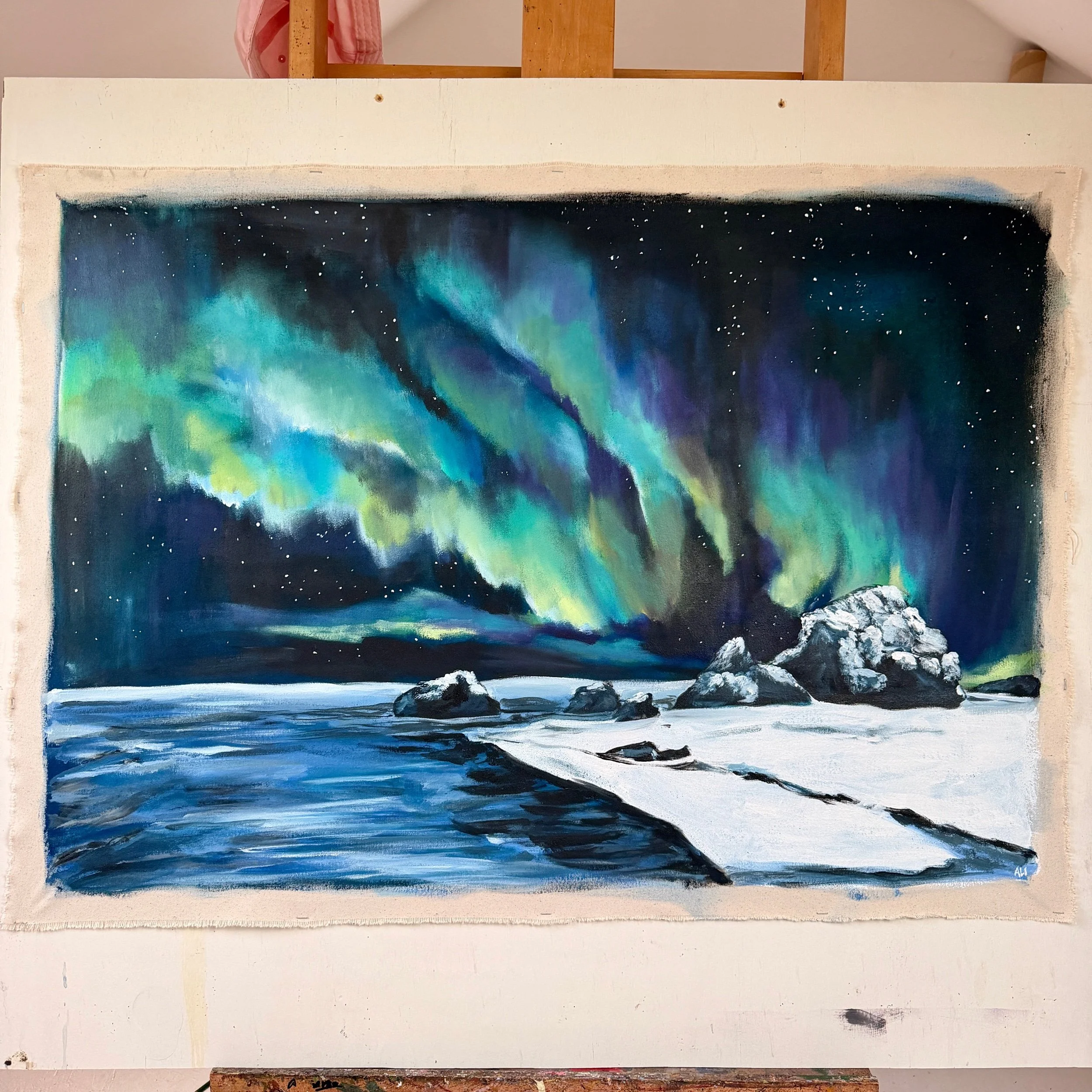 Image 2 of 3
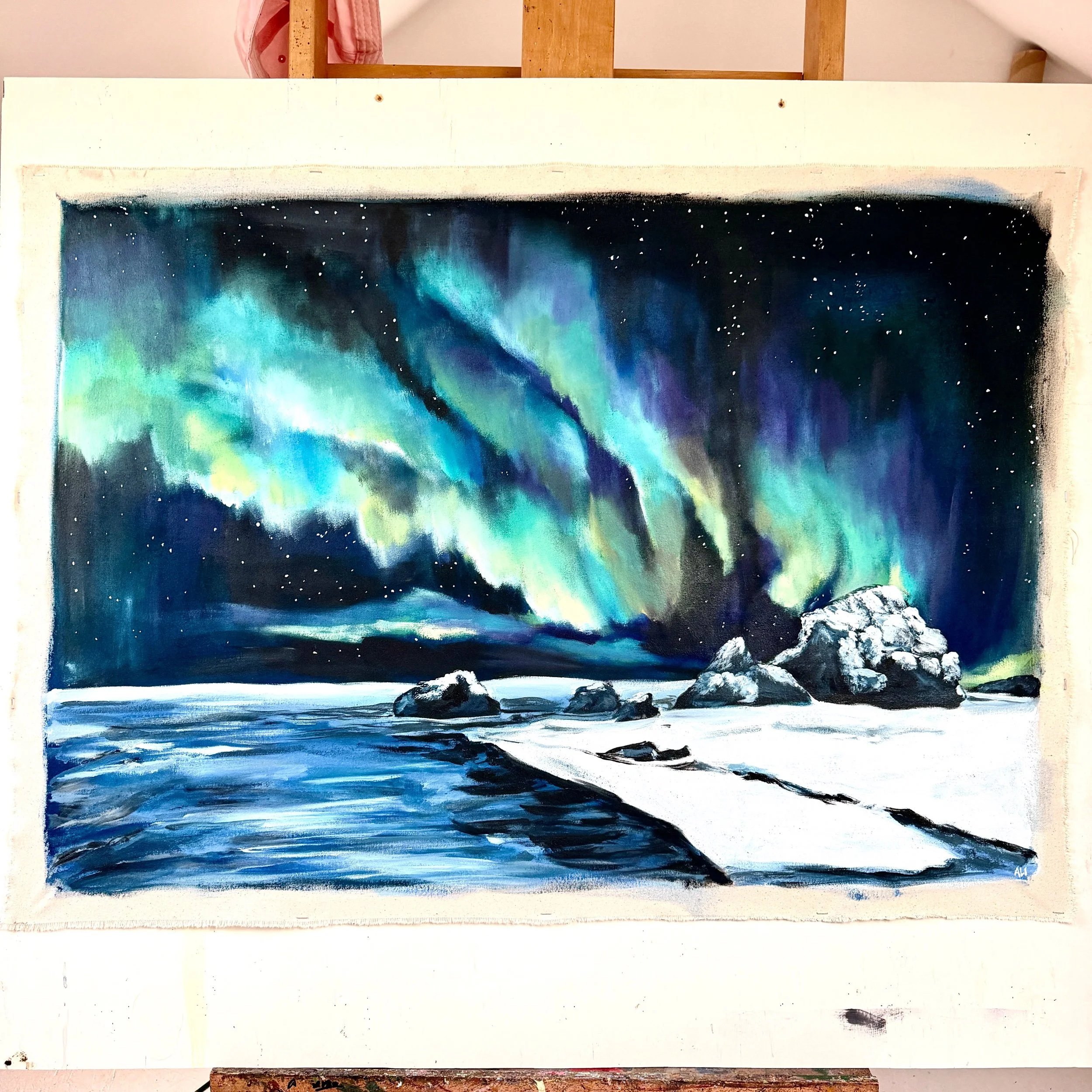 Image 3 of 3
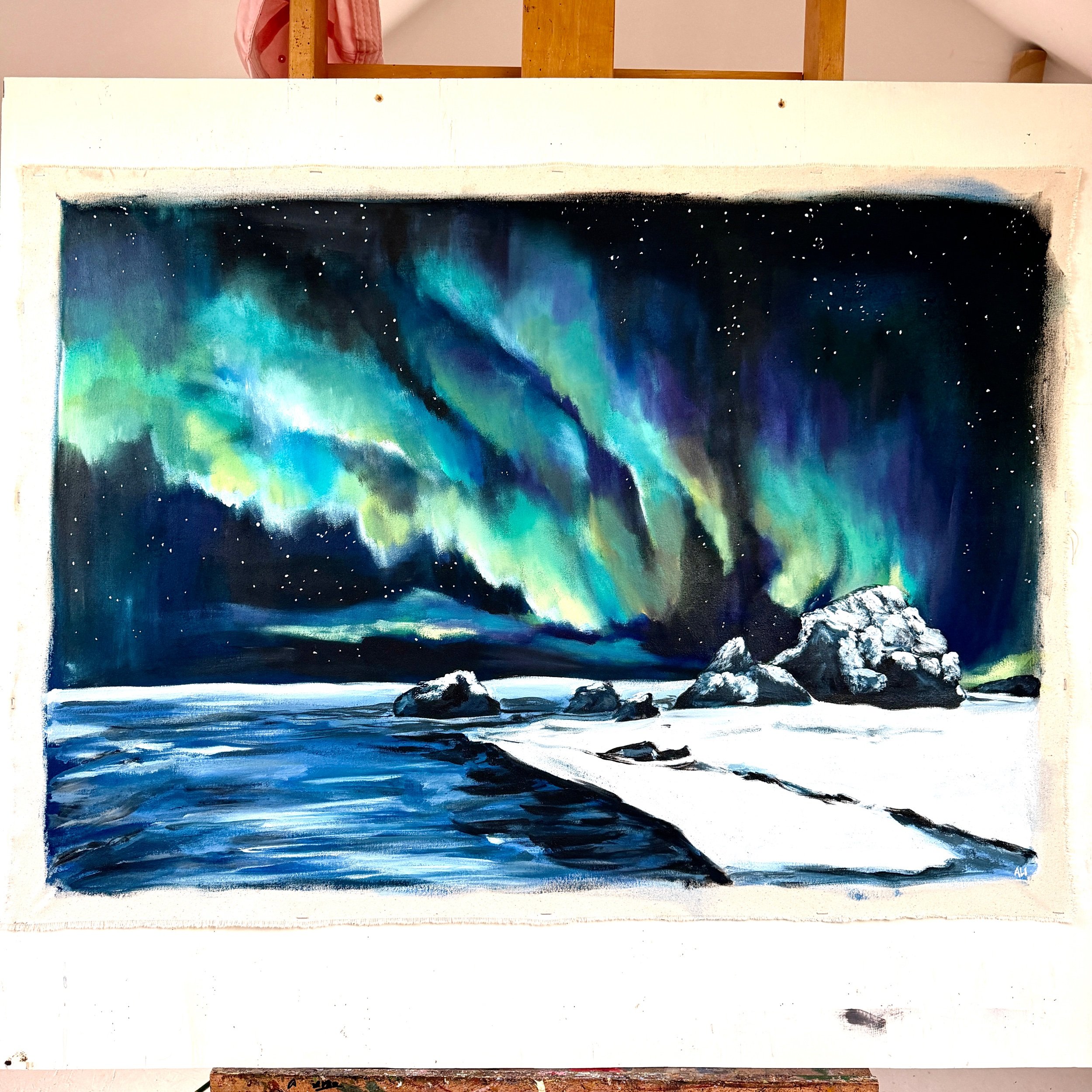
Original painting on raw canvas with clear gesso base, 30×42. This painting is #20 in the 26 Endangered Ecosystems series that will exhibit in early 2027. Pre-order the painting now to reserve it ahead of exhibition and it will ship to you for free in 2027. Email alissasyverson@gmail.com for any questions.
Context: The tundra is the coldest of the five major biomes, and it is similar to a desert in that it receives really low amounts of precipitation. The temperatures are so cold that there is a layer of permanently frozen ground below the surface, called permafrost.
This is not a surprise - the Artic tundra is the poster child for the climate crisis. It is one of the most visibly obvious locations that the climate is changing, with ice melting and plants growing where they previously did not. Wildlife like polar bears, caribou, and arctic foxes are losing their habitats.
Over the last 50 years, average temperatures in the region have increased by 4 degrees. The polar ice cap has shrunk nearly 40% since 2005. And, permafrost has receded by nearly 10%. Permafrost thaw is one of the gravest yet lesser discussed impacts of climate change - it accounts for nearly half of all organic carbon stored within the planet’s soil. As permafrost thaws, it releases carbon dioxide and methane into the atmosphere.
An organization that is helping to inform arctic policy in the context of the climate crisis is the Arctic Institute. You can donate to them at https://www.thearcticinstitute.org/
Original painting on raw canvas with clear gesso base, 30×42. This painting is #20 in the 26 Endangered Ecosystems series that will exhibit in early 2027. Pre-order the painting now to reserve it ahead of exhibition and it will ship to you for free in 2027. Email alissasyverson@gmail.com for any questions.
Context: The tundra is the coldest of the five major biomes, and it is similar to a desert in that it receives really low amounts of precipitation. The temperatures are so cold that there is a layer of permanently frozen ground below the surface, called permafrost.
This is not a surprise - the Artic tundra is the poster child for the climate crisis. It is one of the most visibly obvious locations that the climate is changing, with ice melting and plants growing where they previously did not. Wildlife like polar bears, caribou, and arctic foxes are losing their habitats.
Over the last 50 years, average temperatures in the region have increased by 4 degrees. The polar ice cap has shrunk nearly 40% since 2005. And, permafrost has receded by nearly 10%. Permafrost thaw is one of the gravest yet lesser discussed impacts of climate change - it accounts for nearly half of all organic carbon stored within the planet’s soil. As permafrost thaws, it releases carbon dioxide and methane into the atmosphere.
An organization that is helping to inform arctic policy in the context of the climate crisis is the Arctic Institute. You can donate to them at https://www.thearcticinstitute.org/