 Image 1 of 1
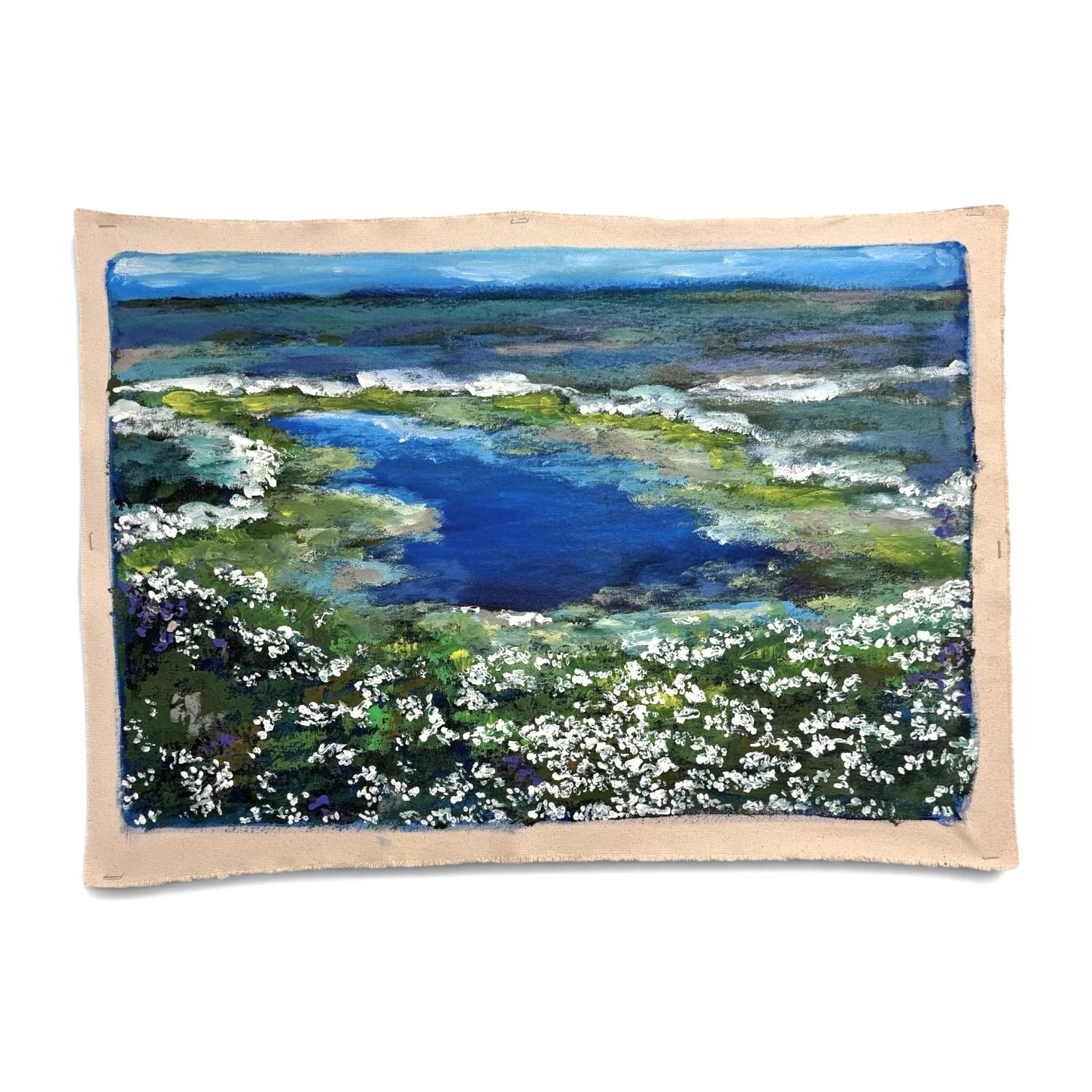
Original painting on raw canvas with clear gesso base, 18×24. This painting is #22 in the 26 Endangered Ecosystem series that will exhibit in early 2027. Pre-order the painting now to reserve it ahead of exhibition and it will ship to you for free in 2027. Email alissasyverson@gmail.com for any questions.
Context: Vernal pools are seasonal wetlands that provide essential habitat for wildlife, serving as the primary breeding ground for several species of amphibians and invertebrates. They are covered by shallow water from winter to spring, but may be completely dry for most of the summer and fall. These wetlands range in size from small puddles to shallow lakes.
They can be found in fields, marshes, ditches, river floodplains and gravel pits, but are most commonly found in isolated depressions within forests. In the spring, wildflowers often bloom in brilliant circles of color that follow the receding shoreline of the pools.
Vernal pools are increasingly threatened. For example, more than 90% of California's vernal pools have already been lost. They are often overlooked when wetlands are identified on development sites because in many months these areas are dry and resemble the surrounding woodland.
One organization working to educate folks about vernal pools is the Minnesota Land Trust, you can find the link to donate to them at https://mnland.org/.