 Image 1 of 1
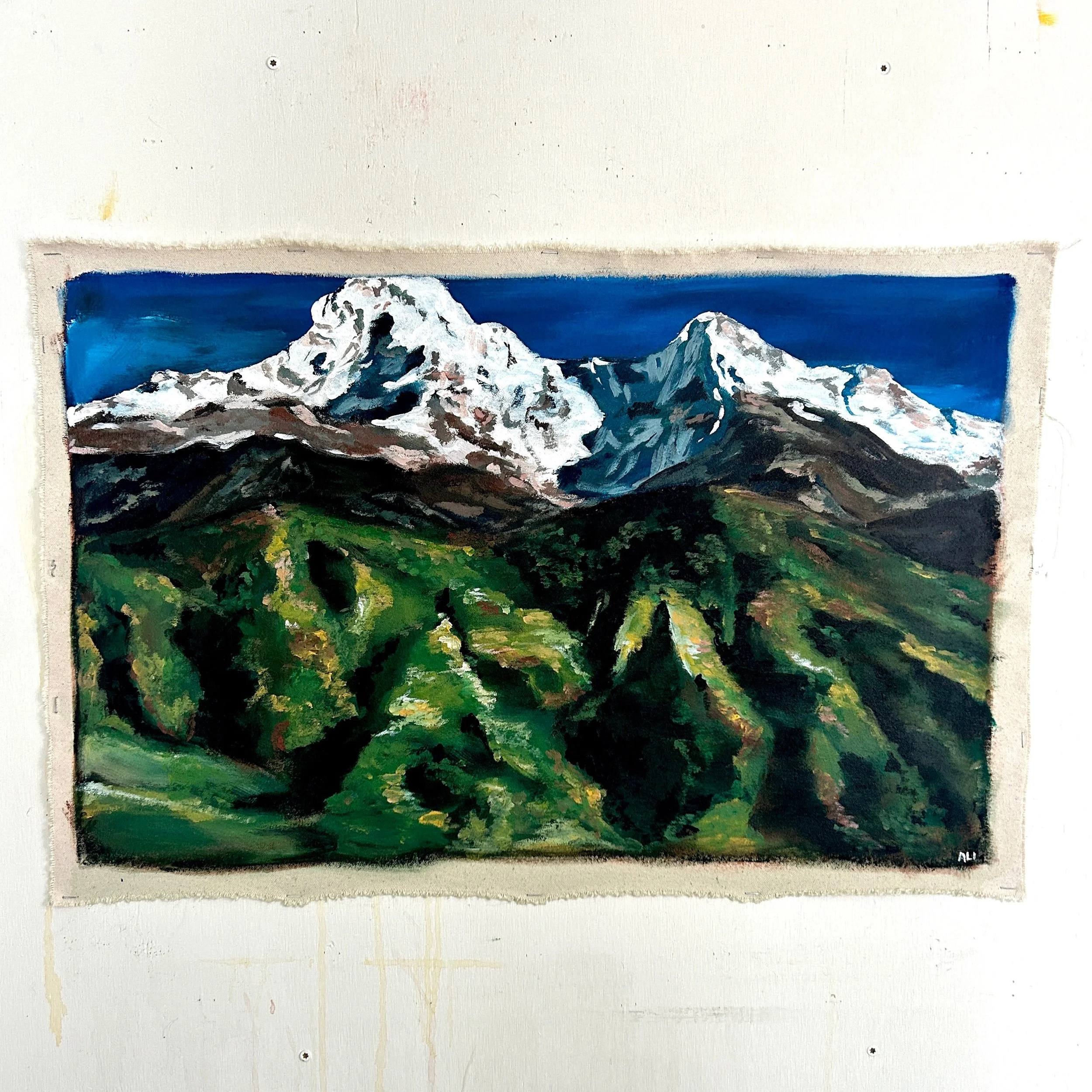
Original acrylic painting on raw canvas with clear gesso base. Unstretched canvas is 18x28.
This painting is #8 in the 26 Endangered Ecosystem series that is intended to exhibit in early 2027. Pre-order the painting now to reserve it ahead of exhibition and it will ship to you for free in 2027. Email alissasyverson@gmail.com for any questions.
Context: The Himalayas are the highest mountain range in the world and the range includes nine out of 10 of the world’s highest peaks, including Mount Everest. This high mountain ecosystem that is made up of shrubs and meadows is the source of Asia’s major river systems that provide water to over two billion people and help to regulate our planet’s climate.
The Himalayas are certainly remote - but despite this, they have been touched by human impact. People have lived in the mountains of the Himalaya for thousands of years, but in recent decades, greater access to the global market has increased the demand for natural resources in the area. As a result, populations are growing in the most productive ecosystems, which are also some of the richest in biodiversity. This has led to clearing of natural habitat for cultivation and domestic livestock. There are several animal species that call these habitats their home – like the snow leopard and yak.
The organization based out of India called the Center for Ecology Development and Research is bridging between research and practice to facilitate socially just and equitable natural resource management in the Himalaya. If you’d like to donate to them the link is here: Ecosystem Series. Donate to the Center for Ecology Development and Research at https://www.cedarhimalaya.org/about-new.php
Original acrylic painting on raw canvas with clear gesso base. Unstretched canvas is 18x28.
This painting is #8 in the 26 Endangered Ecosystem series that is intended to exhibit in early 2027. Pre-order the painting now to reserve it ahead of exhibition and it will ship to you for free in 2027. Email alissasyverson@gmail.com for any questions.
Context: The Himalayas are the highest mountain range in the world and the range includes nine out of 10 of the world’s highest peaks, including Mount Everest. This high mountain ecosystem that is made up of shrubs and meadows is the source of Asia’s major river systems that provide water to over two billion people and help to regulate our planet’s climate.
The Himalayas are certainly remote - but despite this, they have been touched by human impact. People have lived in the mountains of the Himalaya for thousands of years, but in recent decades, greater access to the global market has increased the demand for natural resources in the area. As a result, populations are growing in the most productive ecosystems, which are also some of the richest in biodiversity. This has led to clearing of natural habitat for cultivation and domestic livestock. There are several animal species that call these habitats their home – like the snow leopard and yak.
The organization based out of India called the Center for Ecology Development and Research is bridging between research and practice to facilitate socially just and equitable natural resource management in the Himalaya. If you’d like to donate to them the link is here: Ecosystem Series. Donate to the Center for Ecology Development and Research at https://www.cedarhimalaya.org/about-new.php