 Image 1 of 1
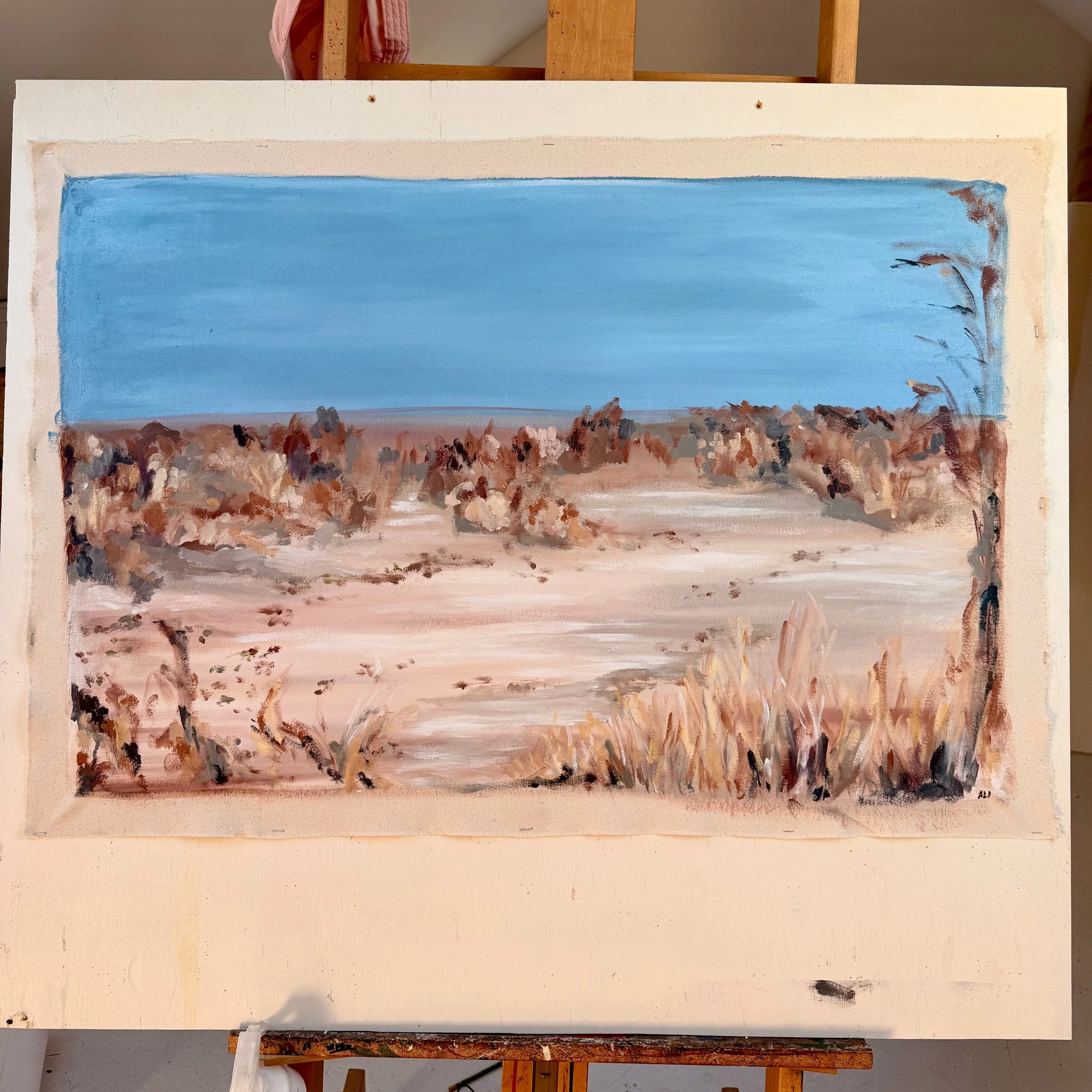
Original painting on raw canvas with clear gesso base, 29×42. This painting is #21 in the 26 Endangered Ecosystem series that will exhibit in early 2027. Pre-order the painting now to reserve it ahead of exhibition and it will ship to you for free in 2027. Email alissasyverson@gmail.com for any questions.
Context: The Aral Sea is the most unfortunate case that I am painting this year - it is an ecosystem that has already collapsed.
The Aral Sea used to be the third largest lake in the world, but ow, it is a desert. This is because in the 1960s the Soviet Union began diverging the Aral Sea’s inflowing rivers for irrigation purposes, mostly for cotton farming. And, coupled with the lengthening and intensification of summers because of climate change, the sea dried up into a desert by 2007.
Now, dust and salt storms fueled by the exposed seabed affects air quality and agriculture. The entire aquatic food chain has been disrupted, and many species have either become extinct or on the brink of extinction. The region’s once prosperous fishing industry has been devastated.
The Aral Sea Foundation is helping children and mothers in communities hit by the Aral Sea crisis, with clean water, maternal and child health support, and help against toxic dust.
You can donate to them at https://aralsea.org/