 Image 1 of 1
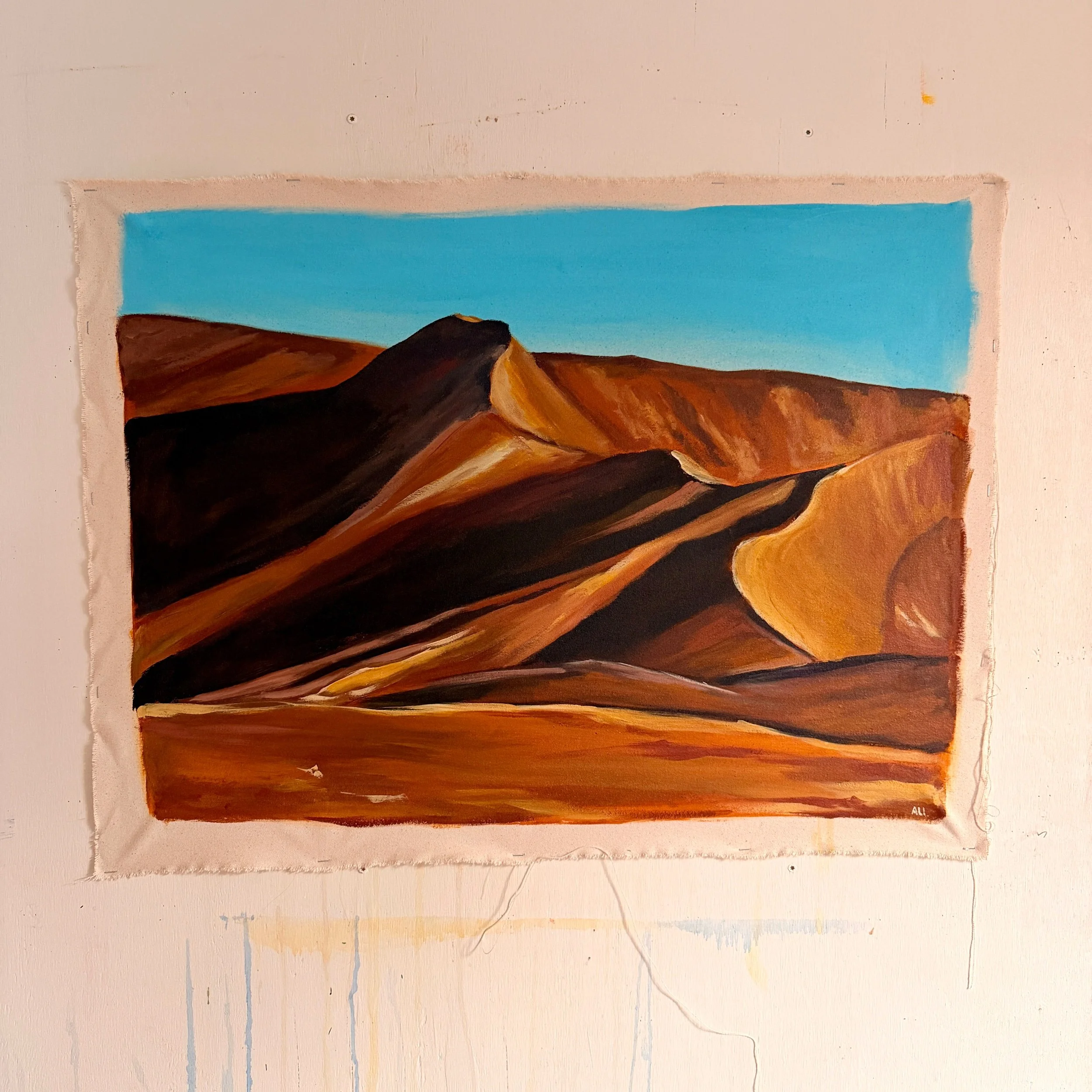
Original painting on raw canvas with clear gesso base, 26x34. This painting is #14 in the 26 Endangered Ecosystems series that will exhibit in early 2027. Pre-order the painting now to reserve it ahead of exhibition and it will ship to you for free in 2027. Email alissasyverson@gmail.com for any questions.
context: The Namib desert is a coastal desert in Southern Africa, stretching for more than two thousand kilometers along the coasts of Angola, Namibia, and South Africa. It is one of the oldest deserts in the world, its estimated to have existed for at least 55 million years, and some of the world’s tallest sand dunes are in the Namib.
Of course, like almost all deserts nowadays, this desert is experiencing changes in temperatures and rain patterns – but the Namib desert has an additional challenge that is uniquely impacting the ecosystem. There is a huge rise in global demand for uranium, and mining exploration and developments have been negatively impacting the desert. Uranium is used for nuclear reactors, and the uranium rush peaked around five years ago, and has left Namib with many active and also abandoned mines.
The mines have been reported to increase livestock mortality, loss of arable land, and water shortages due to mine-related contamination.
One organization working to conserve the Namib is the Namib Desert Environmental Education Trust, they give participants first-hand experience in sustainable living and finding the balance between humans and the environment. You can donate to them here: https://nadeet.org/namib-desert-environmental-education-trust-nadeet
Original painting on raw canvas with clear gesso base, 26x34. This painting is #14 in the 26 Endangered Ecosystems series that will exhibit in early 2027. Pre-order the painting now to reserve it ahead of exhibition and it will ship to you for free in 2027. Email alissasyverson@gmail.com for any questions.
context: The Namib desert is a coastal desert in Southern Africa, stretching for more than two thousand kilometers along the coasts of Angola, Namibia, and South Africa. It is one of the oldest deserts in the world, its estimated to have existed for at least 55 million years, and some of the world’s tallest sand dunes are in the Namib.
Of course, like almost all deserts nowadays, this desert is experiencing changes in temperatures and rain patterns – but the Namib desert has an additional challenge that is uniquely impacting the ecosystem. There is a huge rise in global demand for uranium, and mining exploration and developments have been negatively impacting the desert. Uranium is used for nuclear reactors, and the uranium rush peaked around five years ago, and has left Namib with many active and also abandoned mines.
The mines have been reported to increase livestock mortality, loss of arable land, and water shortages due to mine-related contamination.
One organization working to conserve the Namib is the Namib Desert Environmental Education Trust, they give participants first-hand experience in sustainable living and finding the balance between humans and the environment. You can donate to them here: https://nadeet.org/namib-desert-environmental-education-trust-nadeet