 Image 1 of 1
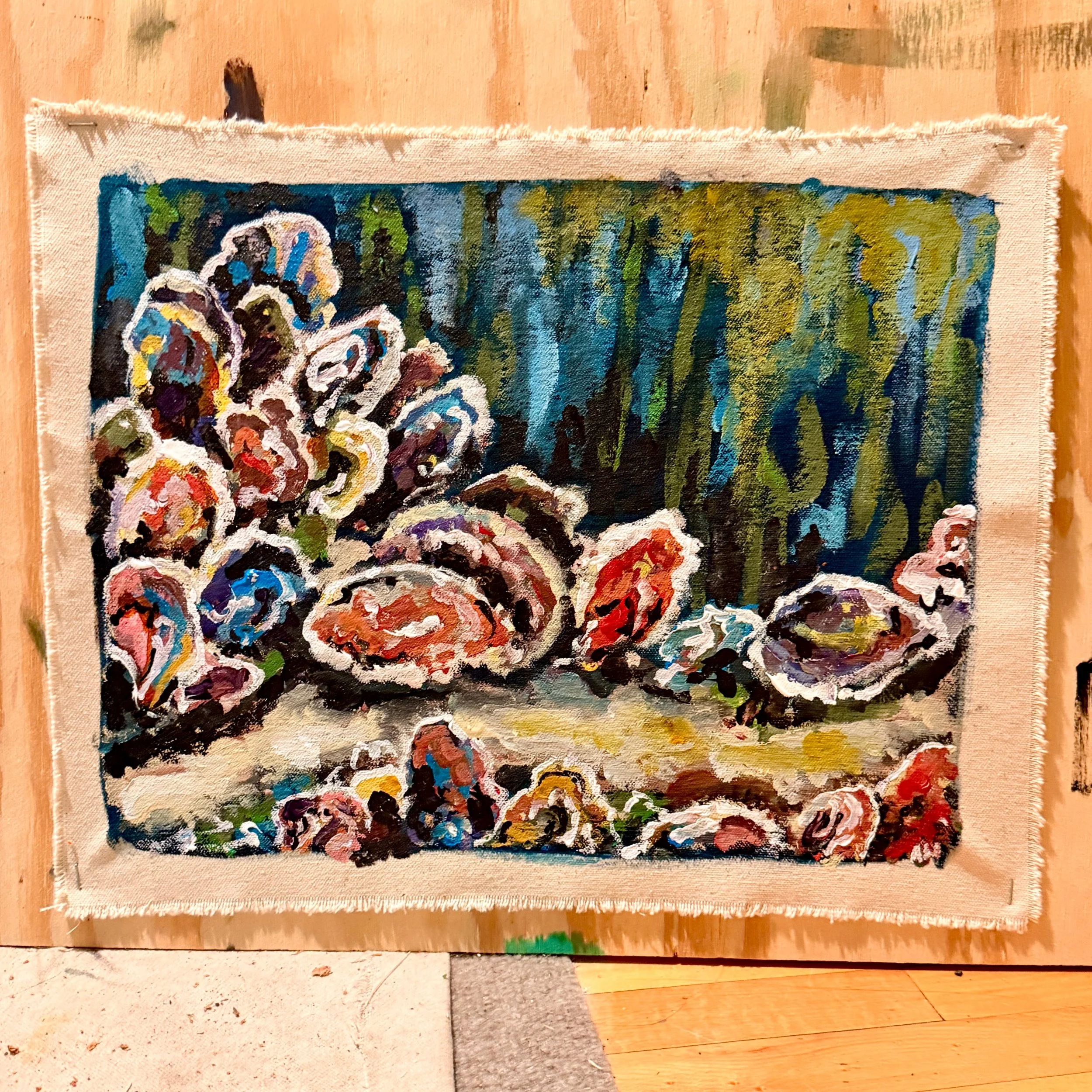
Original painting on raw canvas with clear gesso base, 12×16. This painting is #15 in the 26 Endangered Ecosystems series that will exhibit in early 2027. Pre-order the painting now to reserve it ahead of exhibition and it will ship to you for free in 2027. Email alissasyverson@gmail.com for any questions.
Context: Oyster reefs are not only beautiful to look at, but they also filter water and create habitats for animals, and they protect shorelines by reducing wave energy.
But human activities have destroyed or degraded them over the past two centuries. In the 1800s people started overharvesting the oysters for food, and since then, they have been further impacted by diseases, pollution from fertilizer and sediment runoff, coastal development of ports and marinas, and of course, rising sea temperatures. It is estimated that more than 85% of Australia’s native oyster reefs have disappeared.
The good news here is that oyster reefs can actually be restored - people have been rebuilding reefs by placing recycled shells or reef structures on the seafloor and adding young oysters. Of course, large-scale restoration will take significant time, but it is great that there is some adaptive measures that are working. One organization working to protect oyster reefs is Ozfish, they are leading a community-driven shellfish restoration project called Shellfish Revolution. Donate to them at https://ozfish.org.au
Original painting on raw canvas with clear gesso base, 12×16. This painting is #15 in the 26 Endangered Ecosystems series that will exhibit in early 2027. Pre-order the painting now to reserve it ahead of exhibition and it will ship to you for free in 2027. Email alissasyverson@gmail.com for any questions.
Context: Oyster reefs are not only beautiful to look at, but they also filter water and create habitats for animals, and they protect shorelines by reducing wave energy.
But human activities have destroyed or degraded them over the past two centuries. In the 1800s people started overharvesting the oysters for food, and since then, they have been further impacted by diseases, pollution from fertilizer and sediment runoff, coastal development of ports and marinas, and of course, rising sea temperatures. It is estimated that more than 85% of Australia’s native oyster reefs have disappeared.
The good news here is that oyster reefs can actually be restored - people have been rebuilding reefs by placing recycled shells or reef structures on the seafloor and adding young oysters. Of course, large-scale restoration will take significant time, but it is great that there is some adaptive measures that are working. One organization working to protect oyster reefs is Ozfish, they are leading a community-driven shellfish restoration project called Shellfish Revolution. Donate to them at https://ozfish.org.au