 Image 1 of 1
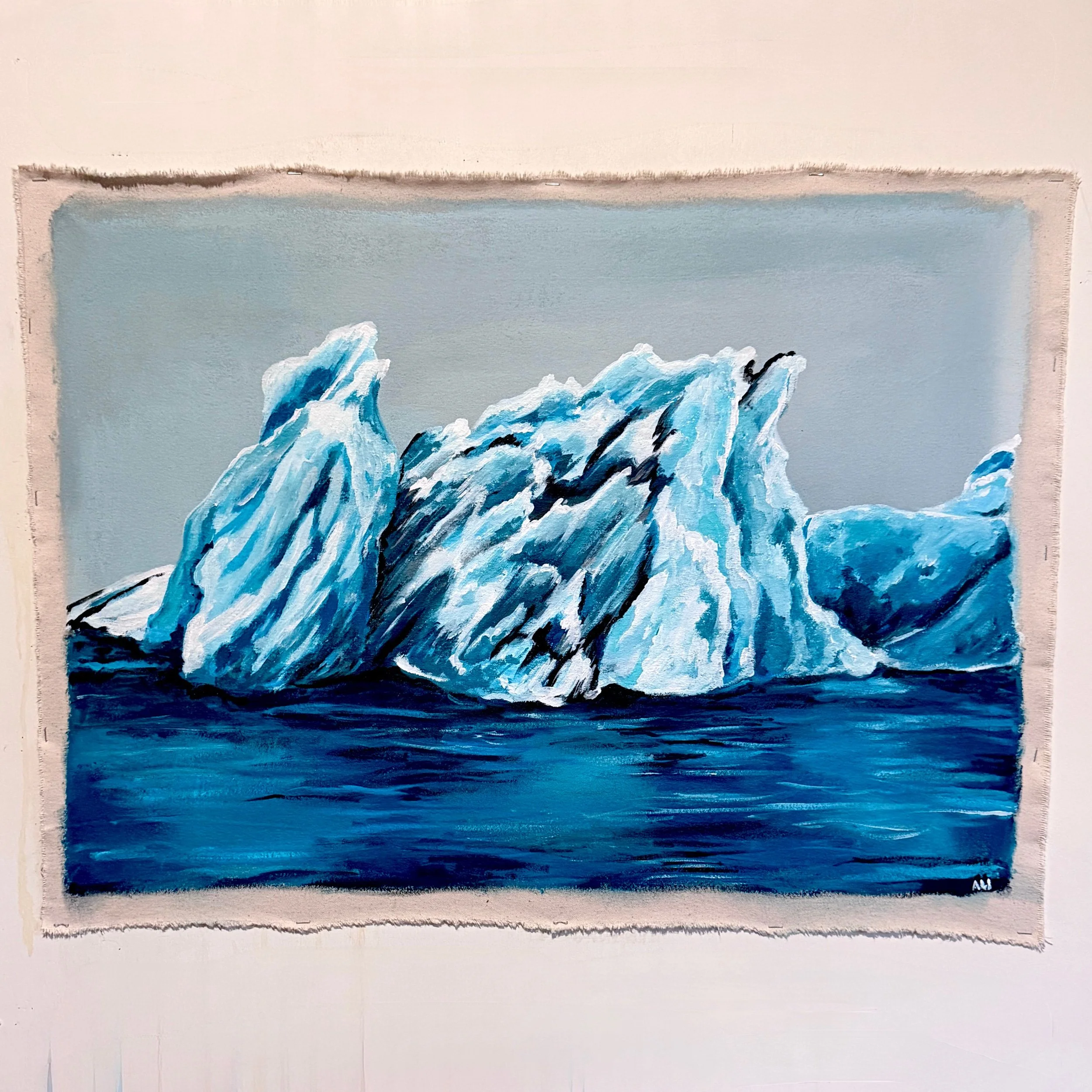
Original acrylic painting on raw canvas with clear gesso base. Unstretched canvas is 24x32.
This painting is #9in the 26 Endangered Ecosystem series that is intended to exhibit in early 2027. Pre-order the painting now to reserve it ahead of exhibition and it will ship to you for free in 2027. Email alissasyverson@gmail.com for any questions.
Context: Glaciers and ice sheets lock up most of the Earth’s freshwater and are a sensitive indicator of our changing climate. And Iceland is one of the most visible places where this is happening - glaciers and ice sheets are retreating faster than ever, affecting ecosystems, sea level, and even settlements.
Burning fossil fuels, deforestation, and industrial emissions all contribute to the accumulation of greenhouse gas emissions in the atmosphere, which raises the temperature and shortens the winters so less snow accumulates on the glaciers. The warming air also melts ice from the surface, which reduces the overall mass of the glaciers.
Over the past century, Iceland has lost about 16% of its glacial ice, and as it melts, water flows into the ocean, which contributes to sea level rise. Coastal areas worldwide are at risk of flooding and erosion because of this, and animals living near or even on glaciers, like Arctic foxes and penguins face habitat loss. Fish populations are affected as freshwater from melting glaciers alters ocean currents, which ultimately trickles down to our food systems.
An organization based out of Reykjavik called the Iceland Nature Conservation Association is conserving and protecting the wilderness of Iceland and they are working towards establishing a national park in the highlands of the country. Donate to them at https://natturuvernd.is/iceland-nature-conservation-association/
Original acrylic painting on raw canvas with clear gesso base. Unstretched canvas is 24x32.
This painting is #9in the 26 Endangered Ecosystem series that is intended to exhibit in early 2027. Pre-order the painting now to reserve it ahead of exhibition and it will ship to you for free in 2027. Email alissasyverson@gmail.com for any questions.
Context: Glaciers and ice sheets lock up most of the Earth’s freshwater and are a sensitive indicator of our changing climate. And Iceland is one of the most visible places where this is happening - glaciers and ice sheets are retreating faster than ever, affecting ecosystems, sea level, and even settlements.
Burning fossil fuels, deforestation, and industrial emissions all contribute to the accumulation of greenhouse gas emissions in the atmosphere, which raises the temperature and shortens the winters so less snow accumulates on the glaciers. The warming air also melts ice from the surface, which reduces the overall mass of the glaciers.
Over the past century, Iceland has lost about 16% of its glacial ice, and as it melts, water flows into the ocean, which contributes to sea level rise. Coastal areas worldwide are at risk of flooding and erosion because of this, and animals living near or even on glaciers, like Arctic foxes and penguins face habitat loss. Fish populations are affected as freshwater from melting glaciers alters ocean currents, which ultimately trickles down to our food systems.
An organization based out of Reykjavik called the Iceland Nature Conservation Association is conserving and protecting the wilderness of Iceland and they are working towards establishing a national park in the highlands of the country. Donate to them at https://natturuvernd.is/iceland-nature-conservation-association/